
Kelly+Partners / Firm valuation / What is my practice worth?
Selling or partnering your practice
What is my accountancy practice worth?
Irish practices are traditionally priced against gross recurring fees, and paid over time. Put in your fees, see the range, and see how much depends on clients transferring.
Short answerTraditionally €0.75 to €1.25 for every €1 of gross recurring fees, depending on the quantum and quality of the fees, with payment often spread over 18 to 24 months and a clawback for clients who do not transfer (CPA Ireland, Accountancy Plus, 2018). Private equity buyers, now active in Ireland, often price larger practices, over about €5 million in fees, on earnings instead.
In brief
- Traditionally €0.75 to €1.25 per €1 of gross recurring fees (CPA Ireland).
- Size sets the method. Small: under €1m in fees. Mid-sized: €1m to €5m. Large: €5m to €20m, where private-equity-backed buyers increasingly price on earnings. Very large: over €20m. No practice is too big for us, including those over €100m.
- Payment is often spread over 18 to 24 months, with a clawback for clients who do not transfer.
- The highest offer is often highest for a reason. Ask what happens to your clients, your team and you.
- Kelly+Partners buys 51 per cent for cash. You keep 49 per cent and keep running the practice.
ASX:KPG listed since 2017A$159.2m revenue, FY2690+ partnerships since 2006. Not one sold


A quick read on your value
Your fees against the traditional Irish range.
How a valuation is actually worked out
Six steps buyers and valuers follow. Run them yourself before anyone names a price.
- Count only recurring fees. Annual tax, compliance, bookkeeping and advisory retainers. One-off work is usually priced lower or left out.
- Work out maintainable earnings. Take profit before owner pay, then deduct a market salary for the work you do yourself. What is left is what a buyer is really paying for.
- Use the method for your size. Traditionally €0.75 to €1.25 per €1 of gross recurring fees. Private-equity-backed buyers increasingly price larger practices on earnings, and no Irish earnings multiple is published, so ask every buyer which multiple they are using.
- Adjust for quality. Where you land in the range depends on the quantum and quality of your fees: how much recurs, how many clients rely on you personally, how much sits with your largest clients, and whether your team would stay.
- Turn the price into cash. Irish sales are often paid over 18 to 24 months, with a clawback after about a year for clients who do not transfer.
- Compare total value, not the headline. A traditional sale is paid over time and depends on clients moving. A 51/49 partnership pays cash for 51 per cent, and your 49 per cent keeps earning.
Worked example · illustrative
One practice, two methods
A practice with €1.5m of gross recurring fees and €450,000 of profit before owner pay. Replacing the owner’s own work would cost about €150,000 a year.
On fees
€1.13m–€1.88m€1.5m × €0.75 to €1.25. The midpoint is €1.5m.On earnings
€300,000€450,000 − €150,000 of maintainable earnings. Ask any earnings-based buyer what multiple of this they are paying.Paid over
18–24 monthsWith a clawback after about a year for clients who do not transfer.The lesson: Two practices with the same fees can sit €750,000 apart on quality alone, and the cash arrives over two years. Know your earnings number before a buyer tells you theirs.
Mistake 01
Quoting gross fees
One-off work inflates a number a buyer will strip out anyway, and costs you credibility in the first meeting.
Mistake 02
Comparing headlines
A higher price with a long holdback or earnout can put less cash in your hands than a lower price paid upfront.
Mistake 03
Selling when you have to
An owner who must sell this year negotiates from the weakest position. Start the conversation while you still have options.
Range and payment terms: CPA Ireland, Accountancy Plus, 2018. Method and example: Kelly+Partners, illustrative and not a valuation.
What moves your number
Quantum and quality
The multiple moves with the size and quality of your recurring fees (CPA Ireland, Accountancy Plus).
Transfer risk
A clawback lets the buyer deduct from the final payment for clients who did not transfer.
Key staff
If a senior team member could leave and take clients, buyers price that in.
Owner dependence
The more clients are tied to you personally, the more is deferred until they stay.
The number is half the decision
A traditional sale is paid over time and depends on your clients transferring after you leave. A partnership pays you cash for a majority while you keep owning and running the rest.
 Film 0:32
An owner who was where you are
I think it was the best thing for our practice. I think it was the best thing for our outgoing partners, and it was the best thing for me.
Peter DawkinsGriffiths Forrest & Greer, now Kelly+Partners North Sydney
His firm joined in January 2009. He chose this over a merger with a bigger firm, to solve succession for the outgoing partners.
Watch Peter’s film, and 12 more ownersWho you would be partnering with
From six people in 2006 to a listed group
In Ireland since 2025, with Asple & Co in Wexford and an office in Dublin from August 2026. Part of a listed group built one partnership at a time.
Don’t take our word for it
Check our books
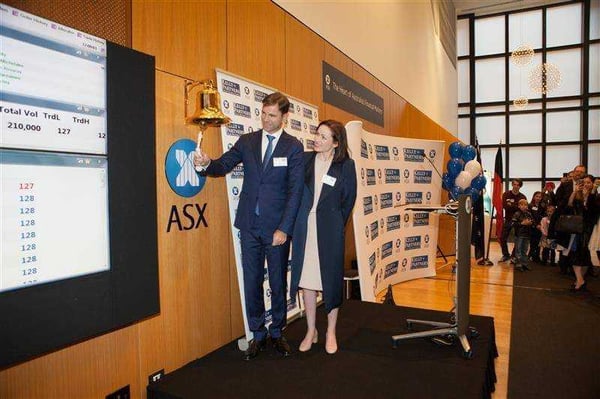
Kelly Partners Group has been listed on the ASX since June 2017. BDO audits our accounts every year and every result goes to the market, so you can check our numbers yourself.


Questions owners ask
How are accountancy practices valued in Ireland?
Traditionally on gross recurring fees, at €0.75 to €1.25 per €1 depending on the quantum and quality of the fees (CPA Ireland, Accountancy Plus, 2018).
How is the price paid?
Often over 18 to 24 months, with a clawback for clients who do not transfer, checked after about a year (CPA Ireland, Accountancy Plus, 2018).
Do private equity buyers pay more?
Often, for larger firms, usually priced on earnings. The trade-off is that the fund plans to sell again.
How can I get a valuation without telling anyone?
Answer ten questions on our valuation page. It takes about 90 seconds, it is confidential, and there is no broker and no listing.
See what your practice is worth before you talk to anyone
Ten questions, about 90 seconds. If your practice fits, we name our price for 51 per cent. You keep 49 per cent and keep running it.
